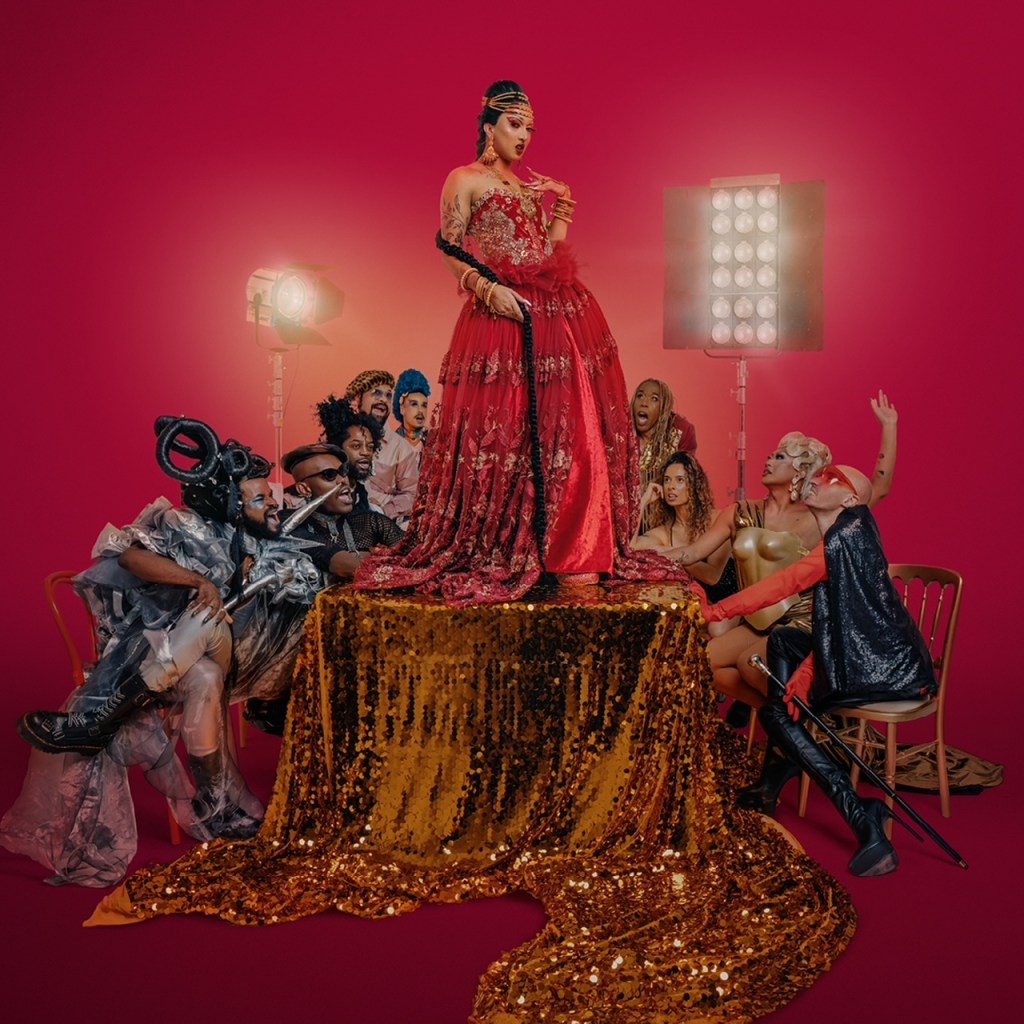
The Drag Queens of Islam
IN CONvERSATION WITH MISS JALEBI BEBE
Combine a halal, Allah-devoted individual with a fiery, passionate drag queen, and you’ll end up with Miss Jalebi Bebe, one of my personal favourite drag queens. Miss Jalebi (also known as Mohammad Rahman) is a self-proclaimed ‘Bengali Barbie’ – a title fitting of such a sensational performer.
Tell me about your drag origin story.
I started experimenting with makeup when I was 16. One day, I decided to put on the wig and go full glam, full fantasy. My sister got me into it initially, and she showed me Bretman Rock, who was the first gay Asian (or Gaysian) I saw doing makeup online. Simply put, I kept playing around with different effeminate looks and … here I am today. For my drag name, I modelled it after the Tesher and Jason Derulo song “Jalebi Baby”, but I wanted to put an Asian twist on it. My grandma’s surname was “Bibi”, plus a lot of South Asians pronounce “baby” as “bebe”, hence the name “Miss Jalebi Bebe”.
Who do you look up to?
Number one is Ariana Grande because I get compared to her a lot. I was first exposed to her when she played Cat Valentine in Victorious and I remember thinking, “she wears a wig and sings and dances and acts … she’s a drag queen”. A lot of people are surprised to hear it, but I learnt a lot from her when Miss Jalebi was first being formed.
Before Victorious, I watched a lot of Bollywood movies. I particularly loved watching Ashwarya Rye and the way she lit up my screen with her singing and dancing. Ashwarya Rye and Ariana Grande are obviously different in many ways, but they both gave me an insight into two cultures that I resonated with and wanted to combine in not only my drag, but my day-to-day life.
How would you describe your drag as it is today?
In three words: Powerful, Bold, and Creative. When it comes to my performances, I love to dance. I love belly dancing and hip-hop dancing. My shows can be very Western but also very traditional South Asian at the same time. I like to play with both sides and be part of both worlds to show that a Muslim person, a Desi person, can do it all and make it in the West.
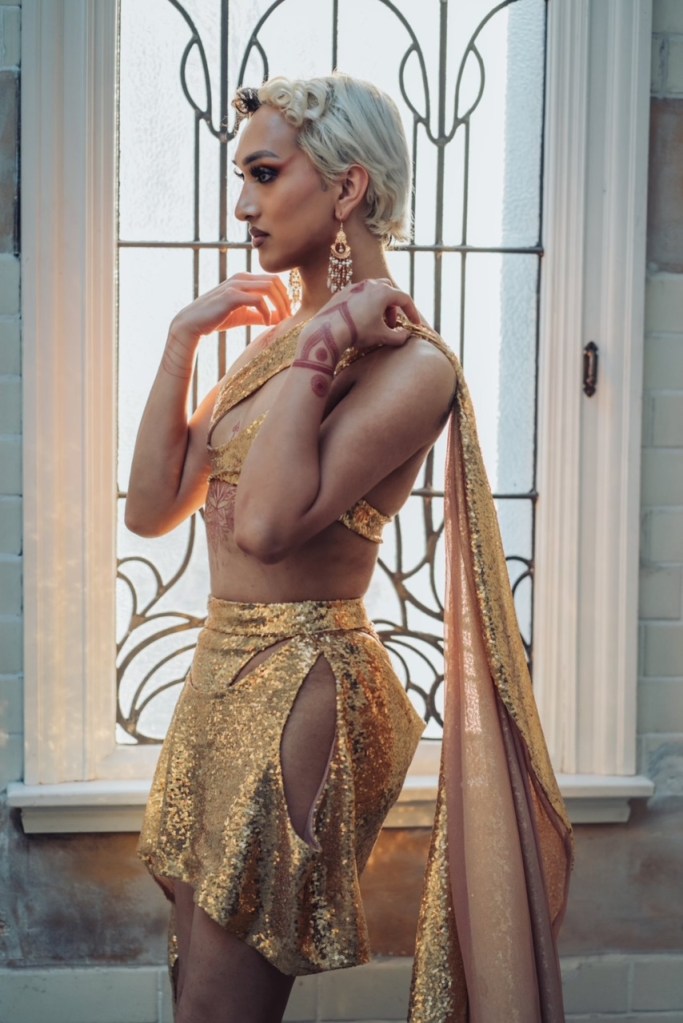
The belly dancing, in particular, seems to be a large feature in your performances. Where does this affinity for belly dancing come from?
Belly dancing has been another way for me to love and accept my body. Without it, I probably wouldn’t be able to look at my body the way I do now or even dress the way I do now. When you’re on a big stage with a lot of eyes on you, judging every part of your body, taking pride in how it moves is very important. Also, I’m self-taught, and so I’m really proud that I can do something I learnt totally on my own, and that sets me apart from a lot of other drag queens.
Belly dancing is so intricate. How did you manage to teach yourself?
Honestly, just through TikTok – there are a bunch of helpful tutorials on there. I saw a bunch of white people doing it, and I thought, “If they can do it, I definitely can do it”, especially because it’s part of my culture!
Outside of your dance performances, you’ve been in TV and Film?
Yes ma’am. I was in Bend It Like Bollywood and Unicorns.
Let’s start with Bend It Like Bollywood. What was your role in the documentary, and how did you find it?
So the documentary followed Vinay, a gender queer South Asian, on his journey to creating his own dance school in Leicester called Bollyqueer. I was there to support him with his first performance outside of London and his first class in Leicester. I was like, “Let me do your make-up. Let me do it and show people that anyone, regardless of gender or race, can not only wear makeup but also feel confident in it”. More so than anything, I just wanted to make a change, to meet other “gaysians” and also to show myself to the world as someone who embraces both their religion and sexuality.
And you were also in the film Unicorns, an unconventional love story between a Muslim drag queen and an Essex boy. Tell me more about that.
Being with so many other brown queens felt so empowering; it gave us all the confidence we needed to keep being ourselves and to keep going no matter what comes our way. In the film, Aysha, the protagonist, talks about all the hate and death threats she gets, and it pushes her to the point where she’s ready to quit drag because all the hatred she experiences convinces her that she’s indulging in haram. Receiving hatred is something so unfortunately common for me, and so it was good seeing that discussed on such a widespread platform.
Including your on-screen roles, what would you say has been the highlight of your drag career?
In terms of acting it’s definitely Unicorns – that was a massive milestone for me. In terms of live performances I would say I showcased some of my best dancing at Manchester Pride … Oh and I recently performed at Club Zindagi which was without a doubt my best performance. The dancing was the best I’ve ever done. I made my own look and was really proud of how uniquely me it was and how incredible it looked.
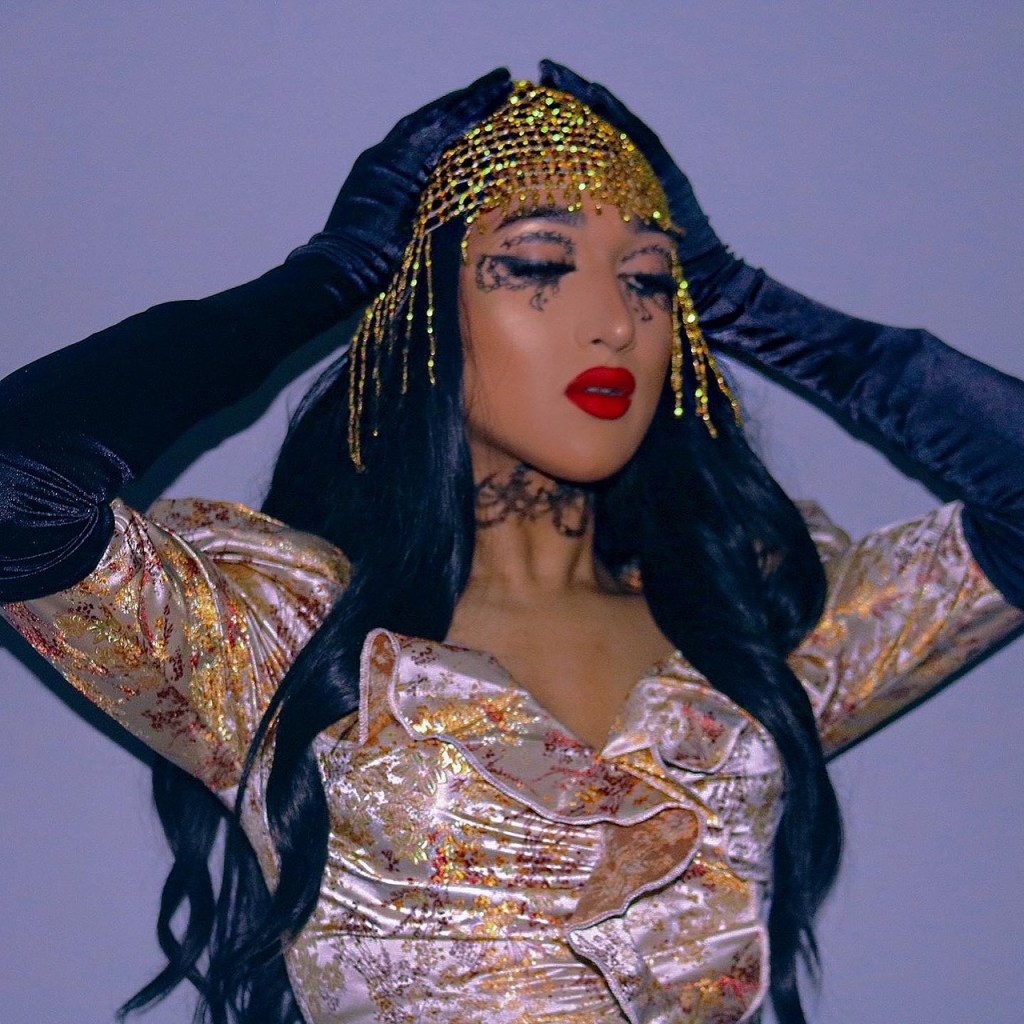
How do you define a successful drag show?
It definitely depends on how much you can connect with your audience and for me, it’s all about eye contact. When people are just really fixating on you and looking you up-and-down it means they’re really locked in – they might be judging, but they’re locked in.
And anyways, a lot of them are watching you because they want to be like you. The best performance is when you can inspire another “you”, especially since there is so much need for gender-queer Desi visibility.
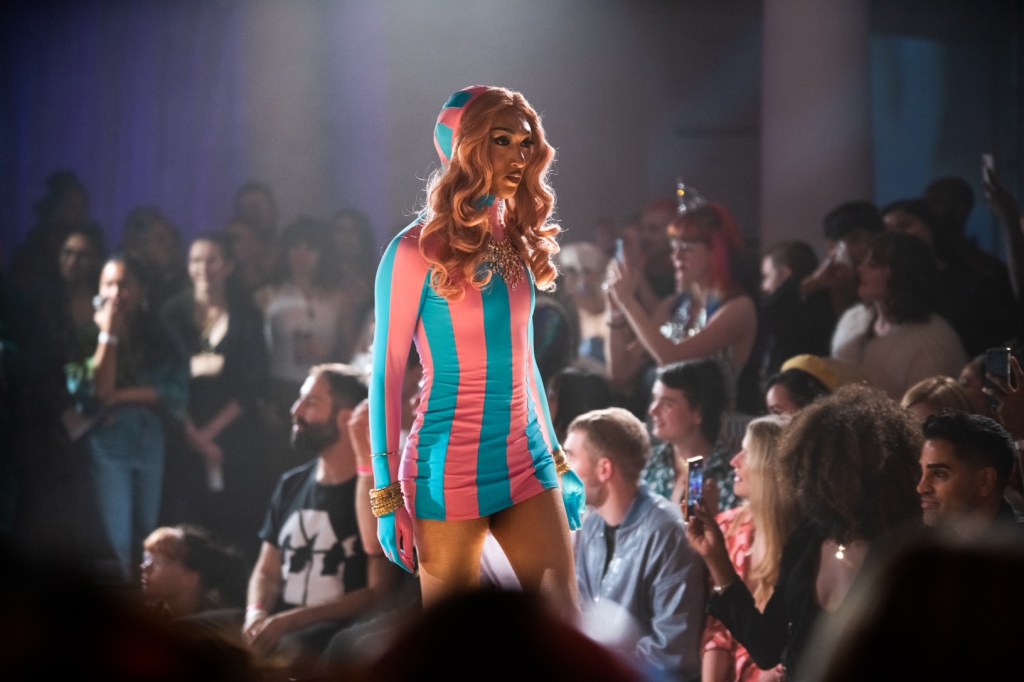
Speaking of visibility, you were the first queer Muslim to walk on a runway at the London Queer Fashion Show. What was that like?
That was great because whenever I’ve seen queer people represented in fashion they’re almost always white. I used to study fashion here in Manchester and I see it as a really important conduit for self-expression and self-acceptance, so being able to bring my queer Muslim identity into the sphere of fashion felt like I was opening doors for myself and others with similar life experiences.
How has Miss Jalebi Bebe changed your life?
She has completely changed my life. Obviously I’ve lost a lot of people along the way and being a queer Muslim drag queen can be really lonely and a burden on mental health, but I wouldn’t be myself without her. She has taught me how to love myself, how to stand up for myself, how to take care of myself. She’s family.
What’s next for the two of you?
Well first I need to fix what’s going on inside of my head, but at the same time I’ve got a lot of things planned to bring Miss Jalebi to more people. I can’t reveal too much but I’m working on a lot of drag outfits to debut some new performances, so if you’re ever in Manchester, keep an eye out.
What changes do you want to see in the drag?
More opportunities and more money. Not even as a joke, I think there needs to be more funding in LGBT+ performance arts. Heterosexual people get so many opportunities, why shouldn’t we? Why shouldn’t we be able to show our talents to the rest of the country and the rest of the world?
Also, I wish everyone was just nicer to each other. There is so much unneeded bitchiness in the drag scene, and if we want to inspire younger gays to get into drag despite all the stigma, we absolutely need supportive communities.
 Erina Mannan's Portfolio